Best Protein Bars 2026: Ranked by Protein, Sugar and Price
This article may contain affiliate links. If you buy through them, we may earn a small commission at no extra cost to you. See our Affiliate Disclosure and Medical Disclaimer.
Walk down any protein-bar aisle and you’ll see the same trick repeated on dozens of wrappers: a giant “20g PROTEIN” callout on the front, and a very different story on the back. Some of these bars are genuinely useful — a convenient way to hit a protein target between meals. Others are candy bars with a protein claim bolted on, loaded with sugar alcohols that work great until they don’t.
We pulled the nutrition panels, prices and customer-review data for the most-purchased protein bars sold through iHerb, ranked them by protein-to-sugar ratio and cost per gram of protein, and checked what the actual research says about whether a protein snack does anything for appetite or metabolism. Here’s what held up.
At a Glance: How the Bars Compare
| Bar | Protein/bar | Sugar/bar | Rating | Best for |
|---|---|---|---|---|
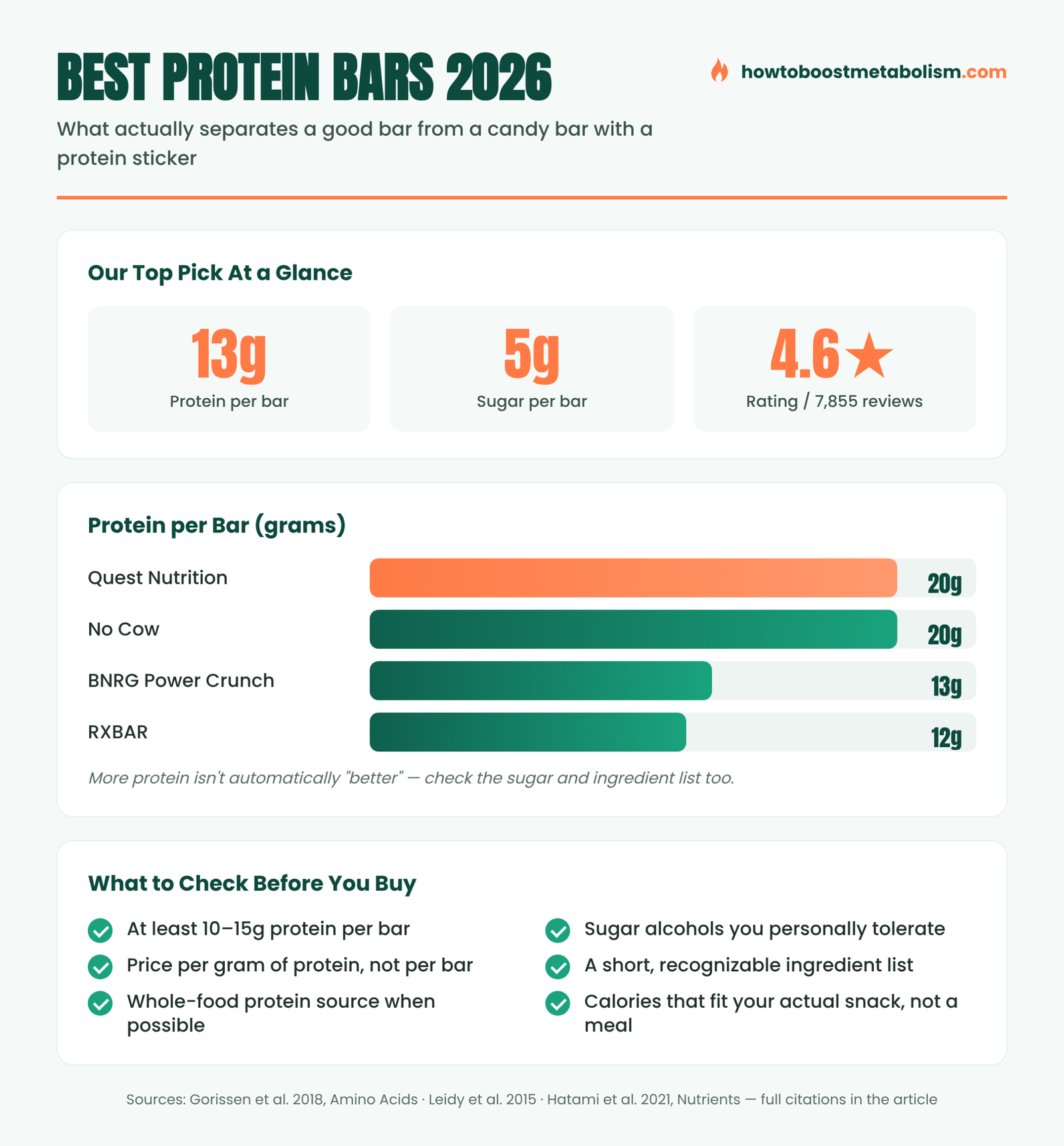
| BNRG Power Crunch (Triple Chocolate) | 13g | 5g | 4.6★ (7,855) | Best taste-to-protein balance |
| BNRG Power Crunch (Peanut Butter Creme) | 13g | 6g | 4.6★ (952) | Lower-sugar flavor option |
| Quest Nutrition (various flavors) | 20–21g | 1g | 4.3★ (900–3,600) | Highest protein, sugar-free sweeteners |
| RXBAR (Peanut Butter Chocolate) | 12g | 14g | 4.3★ (250) | Whole-food ingredient list, no sugar alcohols |
Our Top Pick: BNRG Power Crunch
Power Crunch is a layered wafer bar rather than the dense, chewy “protein brick” most people picture. It lands in the middle on protein per bar (13g) but it’s the only bar on this list that combines a 4.5★+ rating with a very large number of reviews across multiple flavors — 7,855 reviews at 4.6★ for the Triple Chocolate flavor alone, and 4.6★ across the Peanut Butter Creme version too. That consistency across flavors, at this review volume, is unusual in this category and is why it’s our pick over bars with flashier protein numbers but thinner review histories.
Free download
🔥 The Metabolism Starter Kit
3 honest guides: a 7-day reset plan, a foods cheat-sheet and 12 metabolism myths debunked. No spam — unsubscribe anytime.
The Honest Trade-offs on the Other Bars
Quest Nutrition: highest protein, but read the label
Quest bars pack 20–21g of protein with almost no sugar, which is genuinely impressive on paper. The trade-off is the sweetener system (erythritol, sucralose and a soluble corn fiber) that some people digest fine and others find gassy or bloating in a single sitting — a known issue with high-FODMAP sugar alcohols in sensitive guts. Quest’s own review ratings also sit at 4.3★, below our 4.5★ bar for a recommendation, across sample sizes from under a thousand to several thousand reviews depending on flavor. If your gut tolerates sugar alcohols well, Quest’s protein-per-calorie ratio is hard to beat; if you’ve ever had GI issues with “keto” snacks, this is the category to be cautious with.
RXBAR: the whole-food option, with more real sugar
RXBAR’s entire pitch is a short ingredient list — egg whites, dates, nuts — instead of protein isolates and sugar alcohols. That’s reflected in the nutrition panel: 12g protein, but 14g of sugar per bar, all from dates rather than added syrups. It’s a reasonable choice if you’d rather eat real food with no sugar substitutes and don’t mind the calories, but it’s not the move if you’re specifically trying to minimize sugar.
We also checked several plant-based and “clean label” bars (No Cow, GoMacro, NuGo, Aloha) — the nutrition profiles were often competitive, but none currently meet our 4.5★-with-meaningful-review-volume bar, so we’re naming them for comparison rather than linking them.
Does a Protein Bar Actually Do Anything for Your Metabolism?
A protein bar doesn’t “boost” your metabolism in any meaningful sense — no food does, in the way supplement marketing implies. What the research does support is more modest and more useful: protein is the most satiating macronutrient, and replacing a low-protein snack with a higher-protein one can reduce appetite and support better food choices later in the day.
A six-month randomized controlled trial in women with normal-weight obesity compared a 50g-soy high-protein snack against an isocaloric low-protein fruit snack. The high-protein group saw appetite scores drop by 12mm on a standard scale (vs. 0.6mm in the low-protein group), daily energy intake fall by about 166 kcal, waist circumference shrink by 4.3cm, and skeletal muscle mass rise by 1.2kg — all significantly better than the low-protein comparison group (Hatami et al., 2021, Nutrients, PMC8308358).
Separately, a detailed amino-acid analysis of common protein sources found that whey, milk and egg proteins deliver 32–43% essential amino acids with the highest leucine content — the amino acid most tied to muscle protein synthesis — while oat, lupin and wheat-based proteins deliver roughly 21–22%. This matters for bar shopping: a plant-based bar isn’t nutritionally interchangeable with a whey-based one gram-for-gram (Gorissen et al., 2018, Amino Acids, PMC6245118).
And a broader review of high-protein diets found that higher protein intake, specifically the kind that displaces lower-protein snacks, is one of the more reliable tools for appetite control and weight maintenance over time (Leidy et al., 2015).
The honest summary: a protein bar is a convenient delivery mechanism for a macronutrient that genuinely helps with appetite control. It is not a metabolism hack, and the specific bar you choose matters far less than whether you’re using it to replace a lower-protein snack rather than stacking it on top of your normal eating.
How We Picked
- 4.5★ or higher rating with a meaningful number of reviews (hundreds to thousands) before we’ll link a product
- Protein per bar relative to sugar and calories, not protein alone
- Price per gram of protein, since bars range from roughly $0.35 to over $1.50 per gram of protein
- Ingredient transparency — whether sweeteners, sugar alcohols or allergens are clearly disclosed
For more on building a protein target around real food, see our guides on high-protein snacks for metabolism and how much protein you actually need per day. If you’re deciding between a powder and a bar, our whey vs. plant protein comparison covers the same amino-acid trade-offs in more depth, and our evidence-ranked guide to metabolism supplements puts protein in context against other options.
Free download: our Metabolism Starter Kit — a protein calculator, a 7-day meal framework, and a one-page supplement checklist, with zero hype.
Get the Free Starter Kit →A protein bar helps you hit your target, but muscle is built by training. Old School New Body is a follow-along program built around short, F4X-style strength sessions for adults over 35 — a practical choice if you need a plan that fits into a busy week.
Learn More →Affiliate link — we may earn a commission at no extra cost to you. Disclosure
Frequently Asked Questions
Do protein bars help you lose weight?
Not by themselves. A protein bar can help if it replaces a lower-protein, less-satisfying snack and keeps your overall calorie intake lower as a result — research on high-protein snack replacement shows measurable drops in appetite and waist circumference over several months. Eating a protein bar on top of your normal diet, as an extra snack, will not produce the same effect.
How much protein should a bar actually have?
Most of the useful research on satiety uses snacks in the 15–30g protein range. Bars with 10–13g still help if they’re replacing a near-zero-protein snack, but if your goal is appetite control specifically, look toward the higher end.
Are sugar alcohols in protein bars bad for you?
For most people, in normal amounts, no — but sugar alcohols like maltitol, erythritol and sorbitol are known to cause bloating, gas or loose stools in sensitive individuals, especially eaten quickly or in multiple bars at once. If you notice GI symptoms after keto or “low sugar” bars, that’s the likely cause, not a metabolism problem.
Is whey protein better than plant protein in a bar?
Whey, milk and egg proteins have a higher essential amino acid and leucine content than most single plant proteins, which modestly favors them for muscle-building goals. For general snacking and appetite control, the difference is much less important than the bar’s total protein, sugar and calorie content.
What’s the single biggest mistake people make buying protein bars?
Buying based on the biggest number on the front of the wrapper instead of checking the sugar, ingredient list and price per gram of protein on the back. A 20g-protein bar with 20g of sugar isn’t necessarily a better choice than a 13g-protein bar with 5g of sugar — it depends on what you’re trying to accomplish.