Best Electrolyte Powder 2026: Ranked by Evidence
This article may contain affiliate links. If you buy through them, we may earn a small commission at no extra cost to you. See our Affiliate Disclosure and Medical Disclaimer.
Electrolyte powders went from a niche endurance-athlete product to a mainstream grocery-aisle staple in just a few years, and the marketing now ranges from genuinely useful to wildly overstated. Some of that popularity is deserved — sodium, potassium, and magnesium really do matter for hydration and muscle function. Some of it is hype aimed at people who’d do just as well with a glass of water and a balanced diet. Here’s an honest comparison of three well-reviewed options, the actual science behind when you need one, and a caution worth taking seriously if you’re tempted to overdo it.
Do You Actually Need an Electrolyte Powder?
Sodium and other electrolytes lost in sweat genuinely need replacing during longer or harder exercise, and research from the American College of Sports Medicine’s position stand on exercise and fluid replacement outlines why fluid and electrolyte strategy matters for performance and safety during prolonged activity (Sawka et al., 2007). Sweat sodium losses vary enormously between individuals — some people are much “saltier” sweaters than others — which is part of why fixed hydration advice is hard to generalize, and why individualized fluid and electrolyte replacement strategies tend to work better than one-size-fits-all rules (Shirreffs et al., 2004).
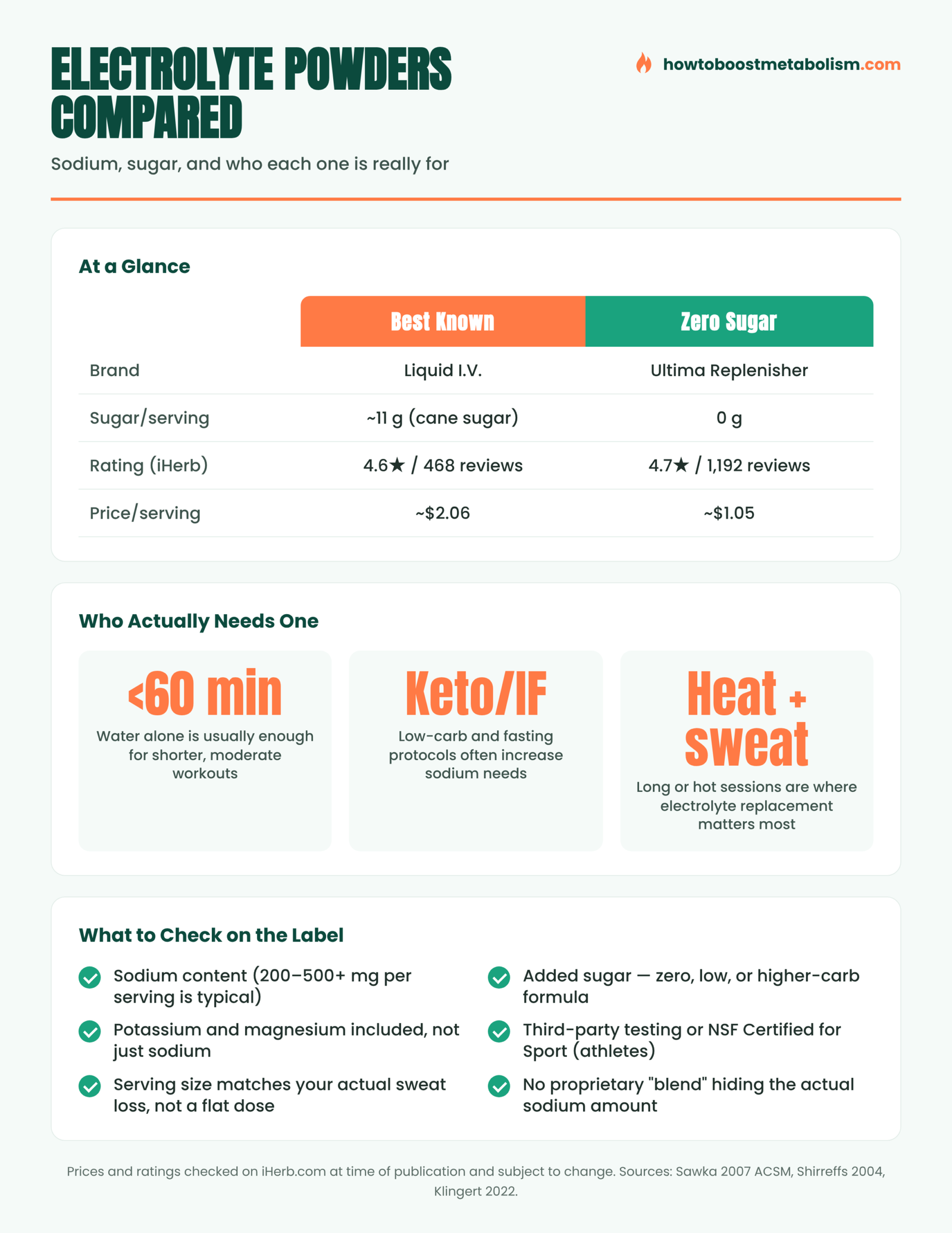
For a 30-minute moderate walk or an easy gym session, plain water is almost always sufficient. Electrolyte powders earn their place for longer or hotter workouts, heavy sweating, low-carb or ketogenic diets (which increase sodium excretion), intermittent fasting windows, or recovering from vomiting or diarrhea. If you’re not sure which camp you’re in, our deeper breakdown on whether electrolytes help with weight loss and metabolism covers the nuance.
How We Compared These
We looked at sodium and electrolyte content, added sugar, independently reported customer ratings and review volume, and price per serving, favoring products rated 4.5 stars or higher with a substantial number of verified reviews. Ratings and prices below reflect iHerb listings at the time of publication and can change.
| Product | Rating | Sugar | Price | Best For |
|---|---|---|---|---|
| Liquid I.V. Hydration Multiplier (Lemon Lime) | 4.6★ / 468 | ~11 g | $20.64 | Most popular, easiest to find, glucose-assisted absorption |
| Ultima Replenisher (Variety Pack) | 4.7★ / 1,192 | 0 g | $20.99 | Zero-sugar everyday hydration, keto and low-carb diets |
| Micro Ingredients Electrolytes (Lemon & Raspberry, 2 lb) | 4.7★ / 681 | 0 g | $34.95 | Best value for frequent daily use, bulk powder format |
Free download
🔥 The Metabolism Starter Kit
3 honest guides: a 7-day reset plan, a foods cheat-sheet and 12 metabolism myths debunked. No spam — unsubscribe anytime.
1. Liquid I.V. Hydration Multiplier — Best Known
Liquid I.V. is the name most people recognize, and for good reason: it’s widely available, pleasant-tasting, and built around sodium-glucose co-transport technology, a mechanism with real physiological backing for improving fluid absorption during genuine sweat loss. The trade-off is added cane sugar — roughly 11 grams per stick pack — which matters if you’re watching total sugar intake or following a low-carb diet.
Pros: Widely available, pleasant taste, uses sodium-glucose co-transport which may aid fluid absorption during real sweat loss
Cons: Contains added cane sugar (~11 g/serving), not ideal for low-sugar or keto diets
2. Ultima Replenisher — Best Zero-Sugar Option
Ultima skips the sugar entirely, sweetening with stevia instead, while still delivering six electrolytes including magnesium, which most comparable products leave out. It’s a strong everyday pick for people on low-carb or ketogenic diets, intermittent fasters who don’t want to break a fast with added sugar, or anyone who simply prefers to limit sweeteners. We cover it in more depth in our dedicated Ultima Replenisher review.
Pros: Zero sugar, zero calories, six electrolytes including magnesium, large serving count per box
Cons: No added carbohydrate means it may be less ideal as a sole fuel source for very long endurance efforts
3. Micro Ingredients Electrolytes — Best Value
This 2 lb bulk tub works out to one of the lowest costs per serving of the three, without sacrificing the zero-sugar formula or review quality. The trade-off is format: a bulk powder means measuring out servings yourself rather than tearing open a single stick pack, which is slightly less convenient for travel or the gym bag but noticeably cheaper per serving if you’re using it daily.
Pros: Large 2 lb tub works out to a low cost per serving, zero sugar, strong review count
Cons: Bulk powder requires measuring/scooping rather than single-serve stick packs, less travel-friendly
What’s Actually in an Electrolyte Powder
“Electrolytes” is a broad label covering several different minerals, each with its own role. Understanding them makes label-reading much easier:
- Sodium is the main electrolyte lost in sweat and the one most directly tied to fluid balance and blood pressure regulation during exercise. It’s usually the largest number on an electrolyte label, typically 200–500+ mg per serving.
- Potassium works alongside sodium to regulate fluid balance inside versus outside cells, and supports normal muscle and nerve function.
- Magnesium is involved in muscle contraction and relaxation, and is one of the minerals most commonly lacking in typical Western diets (Rosanoff et al., 2012) — not every electrolyte powder includes a meaningful amount, which is worth checking.
- Calcium and chloride appear in smaller amounts in some formulas and play supporting roles in muscle and nerve signaling and fluid balance, respectively.
Electrolytes on Keto, Low-Carb, and Intermittent Fasting
Carbohydrate restriction lowers insulin levels, and insulin normally signals the kidneys to retain sodium — so cutting carbs significantly, as on a ketogenic or very-low-carb diet, tends to increase sodium (and with it, water and sometimes potassium) excretion. This is a major reason low-carb dieters commonly report headaches, fatigue, or muscle cramps in the first one to two weeks, often nicknamed the “keto flu.” Deliberately adding extra sodium — through broth, added salt, or an electrolyte powder — is one of the more effective, well-known fixes. Intermittent fasting has a milder version of the same effect, particularly during longer fasting windows, which is why a sugar-free electrolyte mix is a popular way to support a fast without breaking it with calories. For more on how fasting interacts with metabolism more broadly, see our comparison of intermittent fasting programs.
DIY Electrolyte Mix: A Free Alternative
If you want to try electrolyte supplementation before spending money on a commercial product, a simple DIY version is legitimate: mix roughly 1/4 teaspoon of salt, a small squeeze of citrus juice for potassium and flavor, and water. It won’t match the precise, measured mineral profile of a commercial powder, and it skips magnesium entirely, but it covers the sodium basics for free. The commercial options above earn their price mainly through convenience, flavor, and a more complete, pre-measured mineral profile — not through some exotic ingredient unavailable elsewhere.
A Safety Note Worth Taking Seriously
More electrolytes is not automatically better, and more water is not automatically safer. Exercise-associated hyponatremia — a dangerous drop in blood sodium — happens when people drink large volumes of fluid, including plain water, without adequate sodium replacement during long endurance efforts; it has been documented repeatedly in marathon runners and remains a recognized cause of serious complications, including, in rare cases, death (Klingert et al., 2022). For everyday use this is a very low risk, but if you’re training for a long endurance event, it’s worth learning proper hydration strategy rather than just drinking as much as possible.
Who Probably Doesn’t Need One
If your exercise is mostly under 45–60 minutes, you’re not in extreme heat, and you’re eating a normal, varied diet, you likely get sufficient sodium and potassium from food already — the average Western diet tends to run high in sodium, not low. In that case, an electrolyte powder is a nice-to-have for taste and convenience rather than a physiological necessity.
What We Don’t Recommend
Be skeptical of electrolyte products that market themselves primarily around weight loss claims rather than hydration — electrolytes support fluid balance and muscle function, but there’s no credible evidence that electrolyte powders by themselves cause fat loss. Also watch for “proprietary blends” that don’t disclose the actual milligram amounts of sodium, potassium, or magnesium — a product that hides its electrolyte content behind a blend name is harder to dose correctly and worth skipping in favor of a fully labeled option.
How to Choose in Under a Minute
- Want the most recognized, widely available option and don’t mind added sugar? Go with Liquid I.V.
- On keto, low-carb, or intermittent fasting, or just want zero sugar? Go with Ultima Replenisher.
- Use electrolytes daily and want the lowest cost per serving? Go with Micro Ingredients.
- Exercising under an hour at a moderate pace, eating normally? Plain water is genuinely enough — save your money.
Free download: our Metabolism Starter Kit — a protein calculator, a 7-day meal framework, and a one-page supplement checklist, with zero hype.
Get the Free Starter Kit →Frequently Asked Questions
Do I actually need an electrolyte powder?
Most people eating a normal diet and exercising under an hour at moderate intensity don’t need one — water is enough. Electrolyte powders become genuinely useful during longer or hotter exercise sessions, heavy sweating, intermittent fasting, low-carb/keto diets (which can increase sodium losses), or bouts of vomiting or diarrhea. If you’re unsure, our guide on whether electrolytes help with weight loss and metabolism breaks down who benefits most.
Can drinking too much electrolyte powder be harmful?
Yes, in excess, especially combined with very high plain water intake. Exercise-associated hyponatremia — dangerously low blood sodium from overhydration without enough sodium replacement — is a documented risk in endurance athletes who drink large volumes of fluid (Klingert et al., 2022). For everyday use, stick to label-recommended servings and talk to a doctor before supplementing if you have kidney disease, high blood pressure, or take medication affecting electrolyte balance.
What’s the difference between sugar-free and regular electrolyte mixes?
Sugar-containing mixes (like Liquid I.V.) use glucose partly because sodium-glucose co-transport can improve fluid absorption in the gut during real sweat loss, which matters more for longer endurance efforts. Sugar-free mixes (like Ultima) are a better fit for everyday hydration, low-carb diets, or anyone trying to limit added sugar.
Is a $20 electrolyte powder actually better than table salt in water?
Not necessarily for sodium alone — a pinch of salt in water is a legitimate, nearly free source of sodium. Commercial powders add convenience, flavor, and a broader mineral profile (potassium, magnesium) in one measured serving, which is the main thing you’re paying for, not a fundamentally different ingredient.
Which electrolyte powder has the least sugar?
Ultima Replenisher and Micro Ingredients Electrolytes are both formulated as zero-sugar, stevia or monk fruit sweetened options, compared with Liquid I.V., which contains added cane sugar per serving as part of its glucose-sodium transport system.
This article is for informational purposes only and is not medical advice. If you have kidney disease, high blood pressure, or take medication affecting fluid or electrolyte balance, talk to your doctor before using an electrolyte supplement. See our full medical disclaimer.